Cost of Land Clearing near Thurston County, WA | Build-Ready Guide
Land Clearing Near Thurston County, WA: What “Build-Ready” Really Means
If you’re staring at a lot full of brush, blackberries, and a few stubborn stumps, “build-ready” can feel far away. Maybe you bought land for a home, shop, barn, or ADU. Maybe you inherited property and want it safe and useful again. Right now, you might feel stuck. You don’t know where to start, how much it will cost, or what steps come first. We hear this every week from local homeowners.
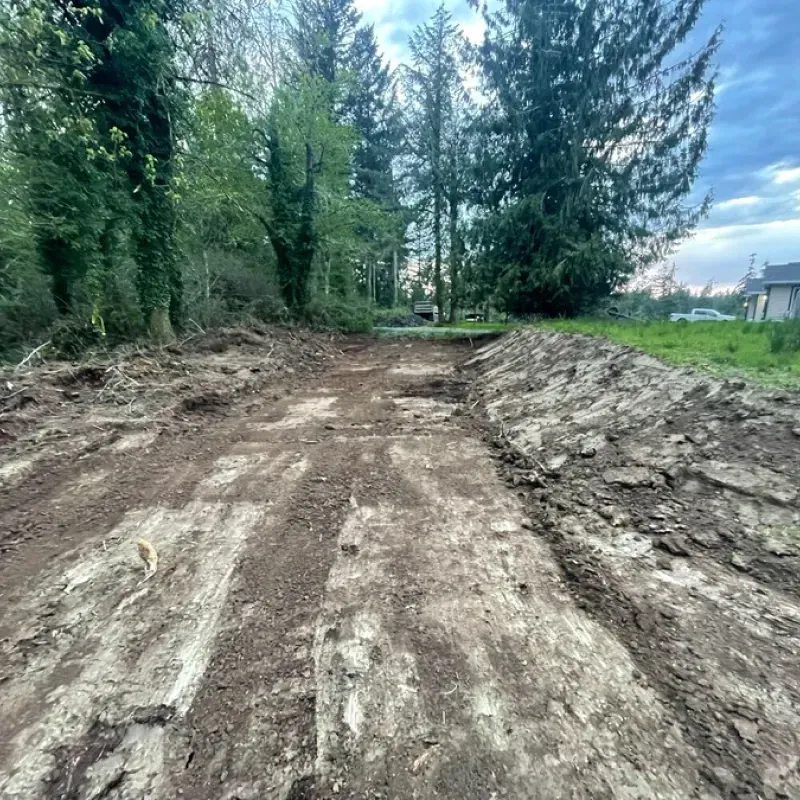
When we say build-ready, we mean the land has been cleared, rough-graded, and prepared so your next contractor—foundation, utilities, or driveway—can get to work without delays. It’s the point where permits are in order, trees and brush are handled, stumps are gone or dealt with, topsoil is preserved where needed, erosion control is installed, and access is safe for equipment. In short: you can finally move ahead with confidence.
At Southbay Septic & Excavation, our job is to turn unknowns into a straight path. We clear the mess, prevent the surprises, and deliver a site that’s ready for your next step.

From Brush to Budget: How Land Clearing Costs Are Calculated in Thurston County
Every property is different, but the way we think about cost is consistent. Here are the main cost drivers:
Scope and finish level: Are you thinning brush or opening a full homesite with driveway, staging area, and pad? A heavier finish costs more.
Vegetation type and density: Thin salal and brush are one thing. Mature firs and maple stands are another. Blackberry can hide obstacles that slow progress.
Stumps and roots: Stump count, stump size, and removal method (grind vs. excavate) affect time and disposal.
Access: Can machines reach the work zone easily, or are we threading through tight spaces or soft ground?
Slope and soils: Steep slopes, wet soils, or hardpan add difficulty.
Disposal/Reuse plan: Mulching in place, chipping, hauling, or burning (where allowed) all carry different costs.
Regulatory requirements: Critical areas, buffers, and tree retention rules can change the plan.
Erosion control and stormwater: In our region, this is not optional; it’s part of responsible clearing.
We price based on known conditions plus a sensible contingency for the things we can’t see until we open the ground (buried wire, rock, old dump piles, etc.).
Permit and Rules for Land Clearing Near Thurston County, WA (What Homeowners Should Know)
Before machines ever roll onto your property, we confirm what permits or notifications apply. In our area, common considerations include:
Land clearing permits or vegetation removal limits within city or county jurisdiction.
Critical areas like wetlands, streams, or steep slopes that require buffers or special methods.
Tree protection/retention requirements in certain neighborhoods or cities.
Erosion and sediment control standards—silt fence, wattles, and stabilized construction entrances.
Hauling regulations for wood, chips, or soil.
You don’t need to memorize all of this. We help you understand what’s needed for your specific parcel and coordinate with your builder or designer when it makes sense. The point is to avoid stop-work orders and keep your schedule on track.
Site Conditions That Raise or Lower Land Clearing Cost (Soil, Slope, Access, Trees)
Think of your lot like a puzzle. Some pieces raise cost, others lower it:
Soil: Sandy soils drain well and can be easier to work. Heavy clay holds water and turns to soup under tracks, slowing progress.
Slope: Even a mild slope can change machine choice, cut/fill needs, and where we stage materials.
Access: Room for equipment, trucks, and turnaround reduces time and risk. Narrow gates or soft driveways add steps.
Tree mix: A few big trees are often faster to handle than a forest of small ones, but stump size matters.
Hidden debris: Old foundations, trash piles, or buried fence wire in blackberries can chew up time (and mulcher teeth).
We build your plan around these realities so you don’t pay for the wrong approach.
Forestry Mulching vs. Traditional Land Clearing Near Thurston County: Cost, Speed, and Finish
Two common methods, two different outcomes:
Forestry Mulching
What it does: A single machine cuts and mulches brush/small trees into a layer of chips on the ground.
Why people like it: Fast, minimal hauling, protects topsoil, leaves a natural mulch.
Best for: Trails, viewsheds, defensible space, pasture edge clean-ups, and light homesite prep.
Limits: Big stumps remain. Not ideal if you need excavation for utilities or a building pad right away.
Traditional Clearing (Excavator, Dozer, Chainsaws, Hauling)
What it does: Uproots brush and trees, removes or piles stumps, rough-grades, and preps pads.
Why people like it: Delivers a true build-ready surface when combined with grading and compaction.
Best for: New home sites, barns, shops, driveways, septic fields, utilities, and drainage work.
Limits: More machine time and often more disposal handling than mulching.
We also mix methods—mulch where it makes sense and excavate where stumps or grades demand it.
Stumps, Roots, and Brush Disposal: Pricing, Hauling, and On-Site Options
Clearing is not just about taking things down; it’s about what happens after:
Stump grinding: Faster and less invasive, but roots remain. Works well for lawns and light-duty areas.
Stump excavation: Removes root balls so you can trench, build, or compact. Needed for pads and utility lines.
On-site reuse: Mulch trails, naturalized beds, or erosion control blankets. Saves on hauling.
Hauling and tipping: When material must go, we load and dispose at approved facilities.
Strategic piles: With the right setbacks and approvals, some landowners cure wood for firewood or future chipping.
We’ll show you the disposal menu and help match it to your goals and budget.
Erosion Control and Stormwater Best Practices for Thurston County Projects
Our soils and rain patterns demand good erosion control. We protect slopes, prevent muddy runoff, and keep neighbors and inspectors happy by using:
Silt fence and wattles to catch sediment.
Construction entrances with rock to keep mud off the road.
Mulch and chip blankets on disturbed areas.
Water bars and swales to slow and guide water.
Phased clearing to keep bare ground to a minimum.
Erosion control isn’t a line item to skip—it’s a shield for your budget and schedule.
Utility Locates, Setbacks, and Safety: Avoiding Expensive Mistakes
We always call in utility locates and verify any private lines you know about (wells, septic, power to outbuildings). We respect setbacks around property lines, streams, and critical areas. Safety isn’t just about people—it’s also about protecting your future plans. One broken water line or cut fiber can blow a budget.
Equipment and Crew Time: Where Your Land Clearing Dollars Go
When you see equipment on site, you’re seeing real value at work:
Excavators and mulchers remove vegetation and stumps, shape ground, and load debris.
Dozers and skid steers push, grade, and clean up.
Trucks and trailers move materials and haul spoil.
Crew labor keeps things safe, efficient, and tidy.
Mobilization and demobilization bring the right tools to your site at the right time.
Supervision and planning make sure work flows in the right sequence.
Good crew rhythm plus the right machines equals a clean site and fewer return trips.
Hidden and Surprise Costs Homeowners Don’t See Coming
We’re blunt about this because surprises are what cause stress:
Buried debris: Old fences, wire, rock pockets, or concrete chunks.
Unauthorized fill: Dumped soil or trash that must be removed.
Soft ground: Requires matting, drying time, or different equipment.
Scope creep: “While you’re here, can you also…?” (We’re happy to help—let’s just price it clearly.)
Weather holds: Heavy rain can pause work to prevent rutting or erosion.
We manage these by building a plan, communicating fast, and keeping alternates ready.
DIY Land Clearing vs. Hiring Pros in Thurston County: Real-World Cost Comparison
DIY looks cheaper on paper: rent a machine, call a friend, and make a weekend of it. But DIY has hidden costs:
Learning curve: A rental machine won’t come with years of local experience.
Damage risk: One wrong move can harm your soil profile, septic, well, or neighbor’s fence.
Time: Projects stretch from days to weeks.
Disposal headaches: You’re still stuck with stumps and debris.
Hiring a pro means:
Speed and safety: We do this every day.
Correct methods: We know where to cut, where to preserve topsoil, and how to protect slopes.
Compliance: We plan for permits and erosion controls.
A build-ready result: Not just “cleared”—actually ready for the next trade.
If you only need a simple brush touch-up on a dry, flat area, DIY might fit. Anything tied to a building, pad, driveway, utilities, or slopes belongs with a trained crew.
How We Price Land Clearing at Southbay Septic & Excavation (Transparent, Step-by-Step)
Here’s our typical process:
Walk-through (or plan review): We listen to your goals and review site conditions.
Scope sketch: We outline areas to clear, what to keep, disposal options, and desired finish.
Method match: Mulch, excavate, or a hybrid—plus erosion control and access improvements.
Itemized proposal: Clear, plain language with line items so you can see where dollars go.
Scheduling: We aim for a weather window that protects your soil and budget.
Execution: Safe, clean, and steady.
Sign-off: We walk the site with you and confirm “build-ready” for the next contractor.
Ways to Reduce Your Land Clearing Cost Without Cutting Corners
Smart savings are about choices, not shortcuts:
Phase the work: Clear the homesite and access now; handle far corners later.
Reuse on site: Mulch brush for erosion control or trails instead of hauling everything.
Mark what matters: Flag trees to keep and areas to avoid so we don’t over-clear.
Time the work: Dry windows reduce rutting and rework.
Combine scopes: Clearing plus driveway rough-in or pad prep often costs less done together.
Have a decision-maker on call: Quick answers keep machines moving.
Timeline: How Long Land Clearing Takes in Thurston County - Start to Finish
Time varies with size and complexity, but here’s a simple pattern we see often:
Planning and permits: A few days to a few weeks depending on jurisdiction and scope.
Mobilization: Usually quick once approvals are set and weather looks good.
Active clearing: Small projects can take a day or two. Larger, wooded sites can take several days or more.
Rough grading and cleanup: Add time for pad prep, driveway shaping, or erosion controls.
Inspection/next trade: Once we’re done, your builder or utility contractor can step in.
We schedule to minimize downtime and protect soil—fast isn’t useful if you end up with ruts and erosion.
What “Build-Ready” Should Include Before Your Excavation or Foundation Work
A build-ready site typically includes:
Access: Stable entrance for trucks and equipment.
Cleared footprint: Home, shop, or barn area fully opened.
Stumps handled: Ground or removed based on your plan.
Rough grade: Slopes eased, pad area shaped.
Erosion control: In place and working.
Spoils managed: Material reused wisely or hauled off.
Stakeout room: Space for your foundation crew and utility trenching.
When we hand off a site, your next trade should be able to start without pause.
Real Examples: Land Clearing Cost Scenarios for Small, Medium, and Large Lots
To show how choices drive cost, here are common scenarios we see:
Small homesite in light brush: Mulching plus a half-day of excavation to pop a few stumps and touch up grade. Reuse chips for erosion control. Quick in, quick out.
Medium lot with mixed trees: Hybrid approach—mulch the light edges, excavate stumps in the pad and driveway, load logs, and rough-grade. Erosion controls at the low side.
Larger wooded site: Sequenced clearing with designated log/stump piles, road/drive rough-in, pad shaping, and phased erosion controls. Potential coordination with a sawyer or mill for valuable timber, if applicable.
Each scenario can be tuned up or down depending on your goals.
Checklist: Everything to Prepare Before Your Land Clearing Starts
Use this to save time and money:
Mark property lines and corners (verify if unsure).
Flag trees to keep and areas to protect.
Identify known utilities, septic, well, or drain fields.
Pick a disposal strategy (mulch in place, haul, or mix).
Decide on finish level (trail-ready vs. build-ready pad).
Confirm permits or approvals; share any plans.
Set a single point of contact for quick decisions.
Plan access for trucks and equipment.
Choose where you want stockpiles (if any).
Look at the weather window; aim for drier ground when possible.
We’ll review this with you so nothing gets missed.
Why Thurston, Pierce, Lewis, and Kitsap County Homeowners Choose Southbay
Our promise is simple: we treat your land like it’s ours. We don’t clear what you want to keep. We don’t leave you with a half-finished pad or a pile of headaches. We match the method to the land, protect the soil, keep water where it should go, and hand you a site that helps your next contractor start strong.
You’ll get straight talk, a clear plan, and a crew that shows up prepared. That’s how we turn brush into build-ready without surprise bills or messy hand-offs.
Ready to see a plan for your property?
Tell us your goal (home, shop, barn, driveway, pasture clean-up) and share a pin or address. We’ll walk the site, talk through options, and give you an itemized proposal that fits your timeline and budget.
Southbay Septic & Excavation — Olympia-based. Serving Thurston, Pierce, Lewis, and Kitsap Counties.


