After the Windstorm: Fallen Trees and Land Cleanup Near Olympia
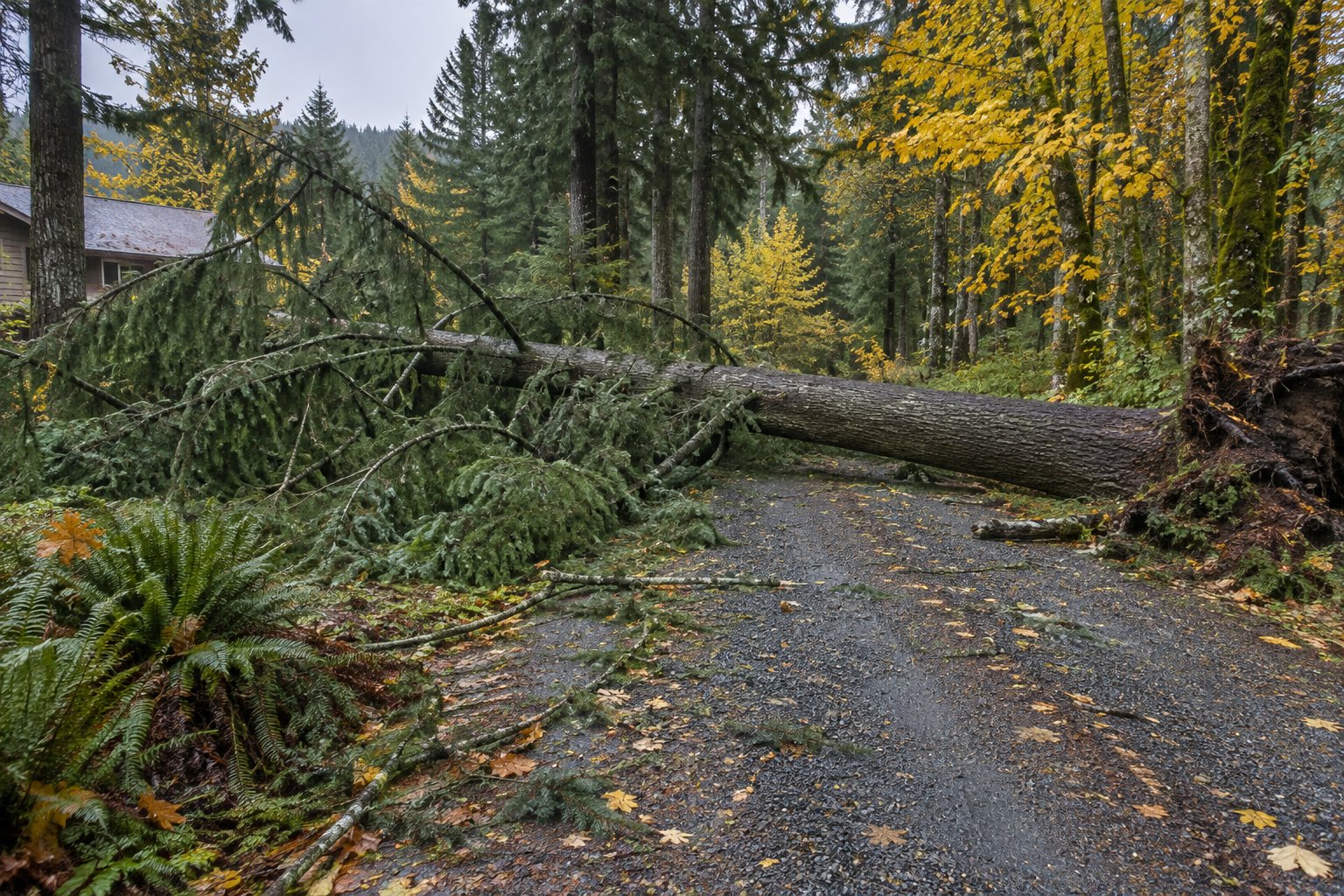
Every fall and winter, windstorms cause extensive damage across the Pacific Northwest, and the Washington State Department of Health says that includes the loss of electricity. If you own acreage or a rural lot near Olympia, Lacey, Tumwater or Shelton, you already know what the morning after looks like: a fir across the driveway, limbs scattered over the yard, and a root plate standing up like a wall of dirt.
The ground makes it trickier. In western Washington the big blows tend to arrive in the same months as the heaviest rain, so the soil is often saturated when the trees come down. This guide covers what to do first, what to check before you start cutting or digging, and how to clean up your land without creating a second problem.
Why storm season and saturated ground go together
NOAA's 1991 to 2020 climate normals for the Olympia airport station show about 8.2 inches of precipitation in November, about 7.9 in December and about 7.8 in January. Those three months add up to roughly 47 percent of the station's 50.6 inch annual total. Trees standing in soaked soil have less grip on their roots, and equipment working on that same soil tears it up quickly.
That is why storm cleanup in Thurston, Mason and Pierce counties is often a two-stage job: make the site safe now, then do the heavy work when the ground can carry it.
Step one: safety before cleanup
Before anyone picks up a saw or a rake, walk the property from a distance and look up.
- Treat every downed wire as live. Puget Sound Energy advises assuming any downed line is energized and staying at least 35 feet away, then calling 911 or your electric utility. Never try to move a limb that is lying on or tangled in a wire.
- Look for hung-up and leaning trees. The Washington Department of Natural Resources suggests not walking beneath dangling limbs or a leaning trunk, and approaching a leaning tree from the side opposite its lean. Binoculars help you inspect from a safe distance.
- Respect bent trees. The CDC warns that "spring poles," meaning trees or branches bent or caught under something during a storm, can snap back with serious force when cut. Even a branch about 2 inches thick can be dangerous when released from tension.
- Leave large trees to qualified tree professionals. DNR's advice is blunt: refrain from doing tree work yourself, because removing large limbs or trees takes specialized equipment and training.
DNR also cautions that after big storms, unqualified "tree cutters" tend to show up. Its tips include getting at least three written estimates, hiring a company that is licensed, bonded and insured, checking for International Society of Arboriculture certification, and walking away from anyone who recommends topping a tree.
Step two: underground lines and your septic system
A fallen tree can do damage you cannot see. DNR notes that uprooted trees may have damaged underground utilities, so keep away from the hole and the disturbed ground until you know what is buried there.
Washington law is also clear on digging: you must request a free utility locate by calling 811 at least two business days before you dig, and digging without one is against state law. That includes pulling a stump or filling the pit left by a root ball.
If you are on a septic system, add one more check. Know where your tank, drain field and reserve area are before any equipment moves. The Washington Department of Health advises avoiding heavy machinery around a drain field while the soil is saturated, and Thurston County Public Health says cars and heavy equipment should not drive or park over a drain field because doing so can crack pipes. If a tree has fallen near the field, or its root plate has lifted soil over it, look for soggy spots, odors or slow drains in the following weeks and tell your county health department if you think the system was affected.
Step three: check the rules before you cut more trees
Cleaning up a tree that already fell is one thing. Taking down additional trees is another, and the rules vary by county and by whether your land is in a mapped critical area.
In unincorporated Thurston County, the county's tree cutting page says a Critical Area Review Permit is required to remove any trees within a critical area or its buffer, including hazard trees there that are within striking distance of a home or accessory building. Those permits typically require a tree risk assessment from an arborist or other qualified tree professional. The county also says no permit is required to remove trees within a tree length of an existing permanent structure if all of the trees are outside critical areas and buffers, but the landowner is responsible for confirming what applies, and site development or land clearing permits may be required for tree removal, understory vegetation or stumps.
If you are removing trees to prepare for future building, a separate Forest Lands Conversion Permit applies, and timber cut without the proper permit can trigger a six-year moratorium on development permits for the property. Cities such as Olympia, Lacey and Tumwater, and Mason and Pierce counties, have their own requirements, so call the planning office that covers your parcel before you commit to a plan.
Step four: deciding where the debris goes
Storm debris piles up fast, and the disposal options have limits.
- Drop-off. Thurston County's Waste and Recovery Center accepts yard waste such as branches for composting, but its acceptance list excludes dirt, rocks, root balls and sod.
- Burning. Land clearing burning requires a permit issued by the Olympic Region Clean Air Agency or your local fire department, and DNR states it does not permit burning of debris from land clearing operations. During a burn ban, all outdoor burning is prohibited. Check the current status before you consider a fire.
- Leaving it in place. Large piles of brush against a building or across a drainage path are a fire and water problem later. Plan to move them.
Step five: restoring the land afterward
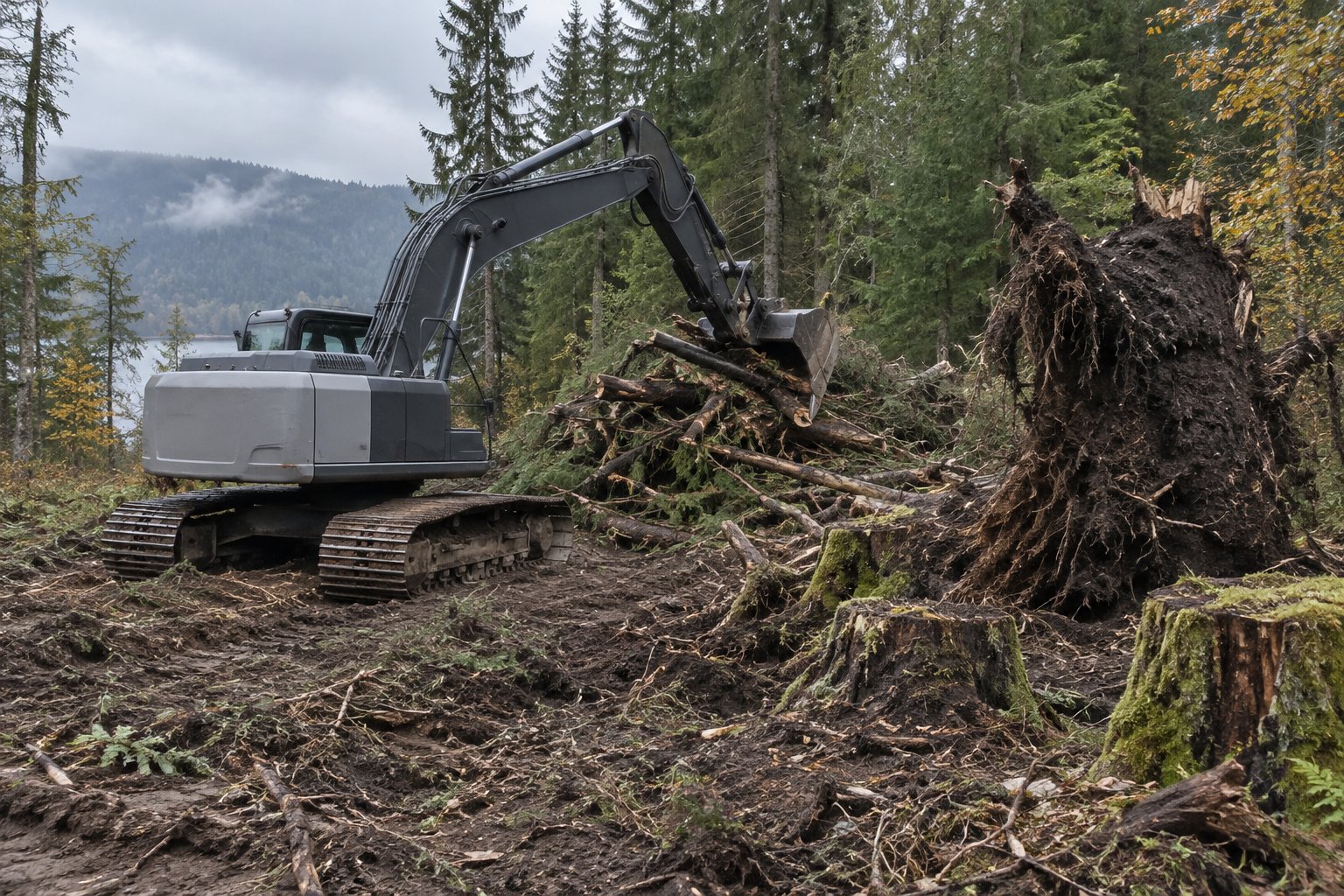
Once the hazards are made safe and the permits are sorted, the physical cleanup is where an excavation contractor helps. At South Bay Septic and Excavation, our land clearing and grading work covers the part of storm recovery that comes after the trees are on the ground:
- Clearing downed trees, brush and debris from building areas, pastures and access routes.
- Removing stumps and root balls that need to come out, and backfilling the holes so water does not pond in them.
- Regrading low spots and ruts so runoff drains away from the house, the drain field and the driveway.
- Checking that ditches and drainage paths were not blocked by debris or soil.
We do not replace the power utility, an arborist or your insurance adjuster, and we will tell you when a job needs one of them first. Photograph the damage before moving anything, and ask your insurer what documentation it wants.
Frequently Asked Questions
Can I remove a fallen tree from my property without a permit?
Often, but not always. In unincorporated Thurston County, trees in a critical area or its buffer need a Critical Area Review Permit, and clearing for future development has its own permit. Rules differ in each city and county, so confirm with the planning department that covers your parcel before work starts.
Is it safe to run heavy equipment over my lawn after a storm?
Not if that lawn is over a septic drain field or the soil is saturated. State and county guidance both say to keep heavy equipment off drain fields, and saturated soil is easily rutted. Ask your contractor to confirm where the tank, field and reserve area are first.
What should I do if a tree fell on or near my septic system?
Do not drive over the area, and call 811 before any digging. Watch for slow drains, odors or wet ground over the field, and contact your county health department if you suspect damage. Repairs to septic components need to be done by a licensed professional.
Can I burn the brush from a storm instead of hauling it?
It depends on the type of burn, the location and the current burn status. Land clearing burns need a permit, and burn bans prohibit all outdoor burning. Check with your clean air agency or local fire district first.
Need help getting your land back in shape?
If storm debris, stumps or washed-out ground are standing between you and a usable property in Thurston, Mason or Pierce County, contact us to talk through the site. You can request a quote through our contact page and tell us what the storm left behind.


